 0 comments
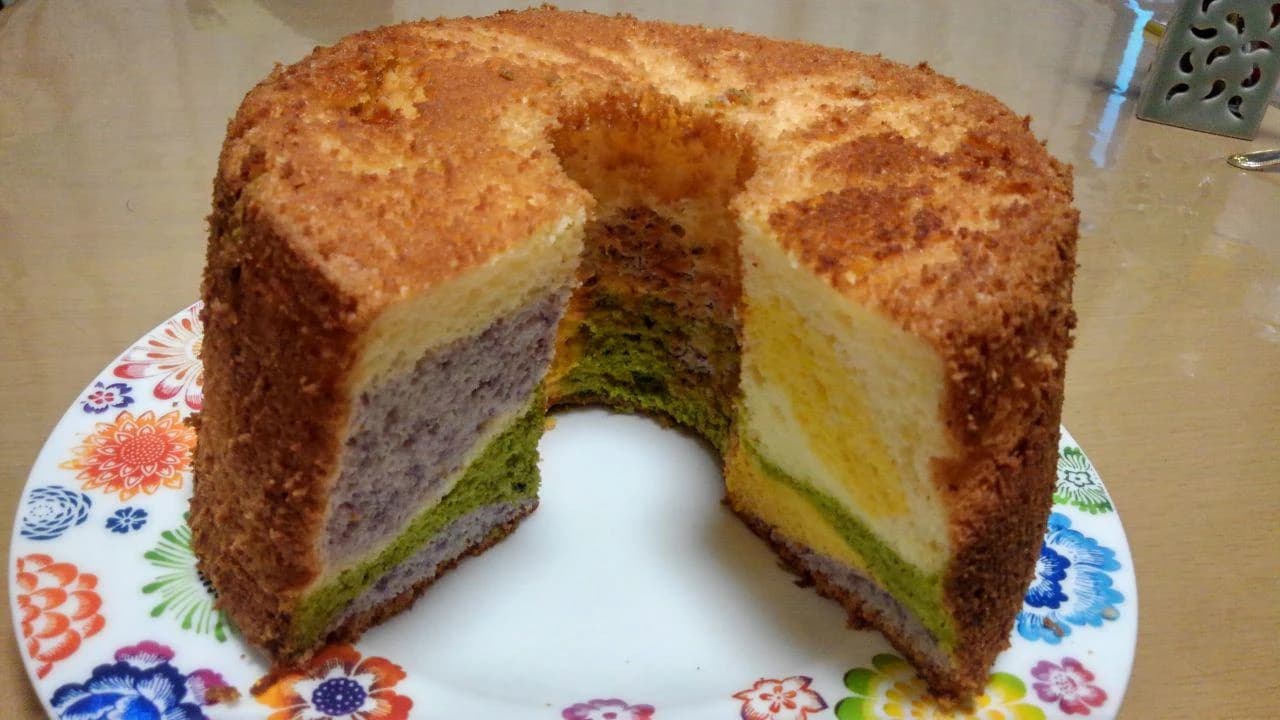
The cover shows a tall ring-shaped chiffon cake with a toasted top and visible pale, purple, and green sponge bands. One wedge is removed to show the interior. Since the cake has no visible frosting or toppings, the ideas here start with that simple shape and offer other finishes as clearly labeled variations.
Before you start
- Chiffon cake baked in a tube pan, cooled according to its recipe
- Long serrated knife for slicing
- Fine sieve for a light powdered sugar finish
- Serving plate or cake stand
How to choose a chiffon cake idea
Start with the cake’s shape and what you want to change. A tube-pan chiffon already has a distinctive ring and an airy crumb, so a light finish often suits it better than heavy frosting. For the least fuss, leave the sides bare and add a little powdered sugar just before serving.
Choose a baked-in color or flavor variation when you want the cut slices to be the main feature. Choose a topping when you want contrast at the table. Keep decorations light: a delicate sponge can compress under heavy layers or topple when moved.
Easy options
Powdered sugar finish: Once the cake is fully cool, sift a thin layer over the browned top. The cover cake’s rough golden surface and colorful interior need no additional decoration. Dust shortly before serving, since moisture can make the sugar disappear.
Citrus and berry plate: Serve plain slices with fresh berries and thin citrus wedges arranged beside them. Keep juicy fruit off the cake until serving so it does not dampen the browned top. Wash produce under running water and dry it before arranging.
Cream on the side: Offer lightly sweetened whipped cream separately so each person can add a spoonful. This keeps the cake’s ring and sponge visible and makes transport simpler than frosting the whole cake. Refrigerate the cream and return leftovers promptly to the fridge.
Options for a little more practice
Color-banded sponge: Use a recipe specifically designed for layered or colored chiffon batter. The cover shows pale, purple, and green bands inside a ring-shaped cake, so a similar look can come from separate portions of colored batter. Follow the recipe’s layering method and avoid stirring the colors together, which blurs the bands.
Light glaze: A thin citrus or vanilla glaze can add shine without hiding the cake. Let the cake cool completely first, then spoon a small amount over the top so it runs in a few controlled drips. Test the consistency over a plate; a glaze that is too thin may run off the cake.
Simple ring garnish: Arrange a few clean, dry berries or citrus pieces on the serving plate around the cake rather than piling them on top. This adds color while leaving the browned top visible. If you set fruit directly on the cake, add it close to serving and use a light amount.
A make-ahead plan
Bake the chiffon according to a reliable recipe and cool it fully as directed; many chiffon cakes are inverted while cooling to help preserve their height. Keep the cake whole until the day you plan to serve it. If making it a day ahead, cover it once cool and store it according to the recipe’s instructions.
Prepare washed, thoroughly dried fruit and any glaze separately. Refrigerate cut fruit and perishable toppings in covered containers. Add powdered sugar, glaze, cream, or fruit shortly before serving so the cake keeps its texture and appearance.
For transport, carry the cake on a stable plate or board in a tall, clean food-safe carrier. Keep it level and away from heat. Bring chilled toppings in a separate insulated container and refrigerate them when you arrive.
Decorating and serving
Use a serrated knife and a gentle sawing motion to cut clean slices without squashing the airy crumb. Wipe the blade between cuts, especially if serving with cream or juicy fruit. For a ring-shaped cake, cut wedges from the outer edge toward the center opening.
If using cream, custard, or another perishable topping, keep it refrigerated at 4°C / 40°F or colder and serve it separately until needed. Refrigerate leftovers promptly in a covered container. Discard perishable food left at room temperature for more than two hours, or one hour when the temperature is above 32°C / 90°F. Follow any shorter storage instructions on the ingredients or recipe.
The little details
- Keep the cake bare if you want its browned top and colorful sponge bands to remain the focus.
- Add powdered sugar and fresh fruit shortly before serving.
- Serve richer or perishable toppings on the side to keep the chiffon light and easy to transport.
- How this guide was made: Kumora wrote it with AI assistance and automated editorial checks, and it has not been kitchen-tested. Bake with your own judgement, and tell us in the comments if anything needs fixing.
Your questions, answered
What decoration works best for a chiffon cake?
A light finish usually suits its airy texture: try powdered sugar, a thin glaze, or fruit served beside the slices. Avoid heavy frosting that could hide the cake or weigh it down.
Can I make the colorful layers shown in the cover?
The cover shows pale, purple, and green sponge bands. For a similar look, use a chiffon recipe that gives instructions for coloring and layering batter; simply dividing an unrelated batter may affect how it bakes.
Can I decorate chiffon cake the day before?
You can bake it ahead and keep it whole, following the recipe’s cooling and storage directions. Add powdered sugar, fruit, glaze, or cream close to serving for a fresher finish.
How should I store leftover chiffon cake?
Store the cake covered and follow the storage guidance for the recipe. Refrigerate promptly if it has a perishable topping or filling, and keep chilled foods at 4°C / 40°F or colder.
Made it? Let’s talk.
Share how your bake went, ask a question, or pass on a helpful tip. There’s a seat for you here.
A kind kitchen is a happy kitchen. Our community guidelines →
No comments yet. Be the first to say hello.